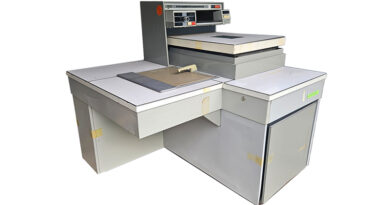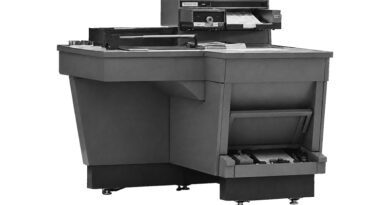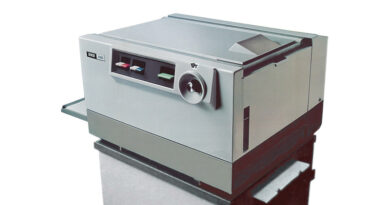
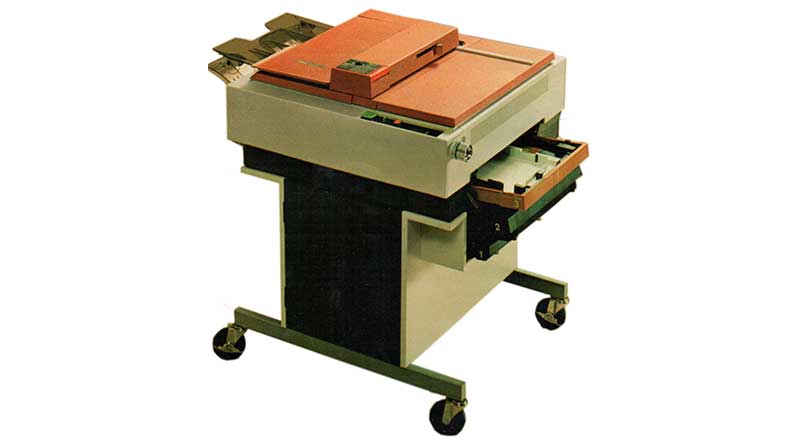
Xerox 3100LDC/3103
Last modified:
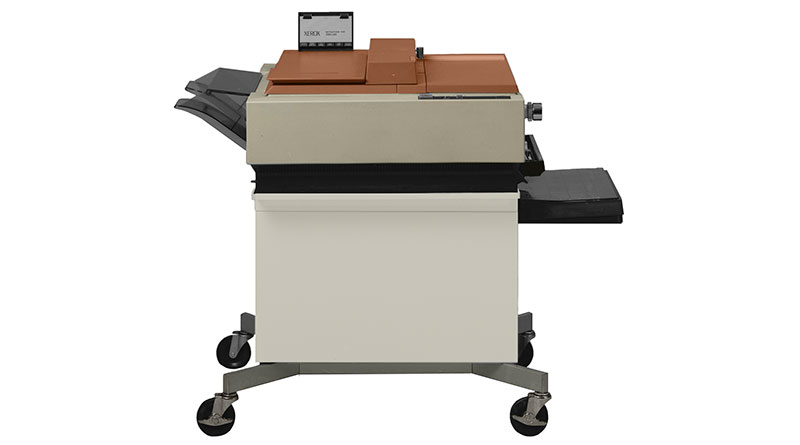
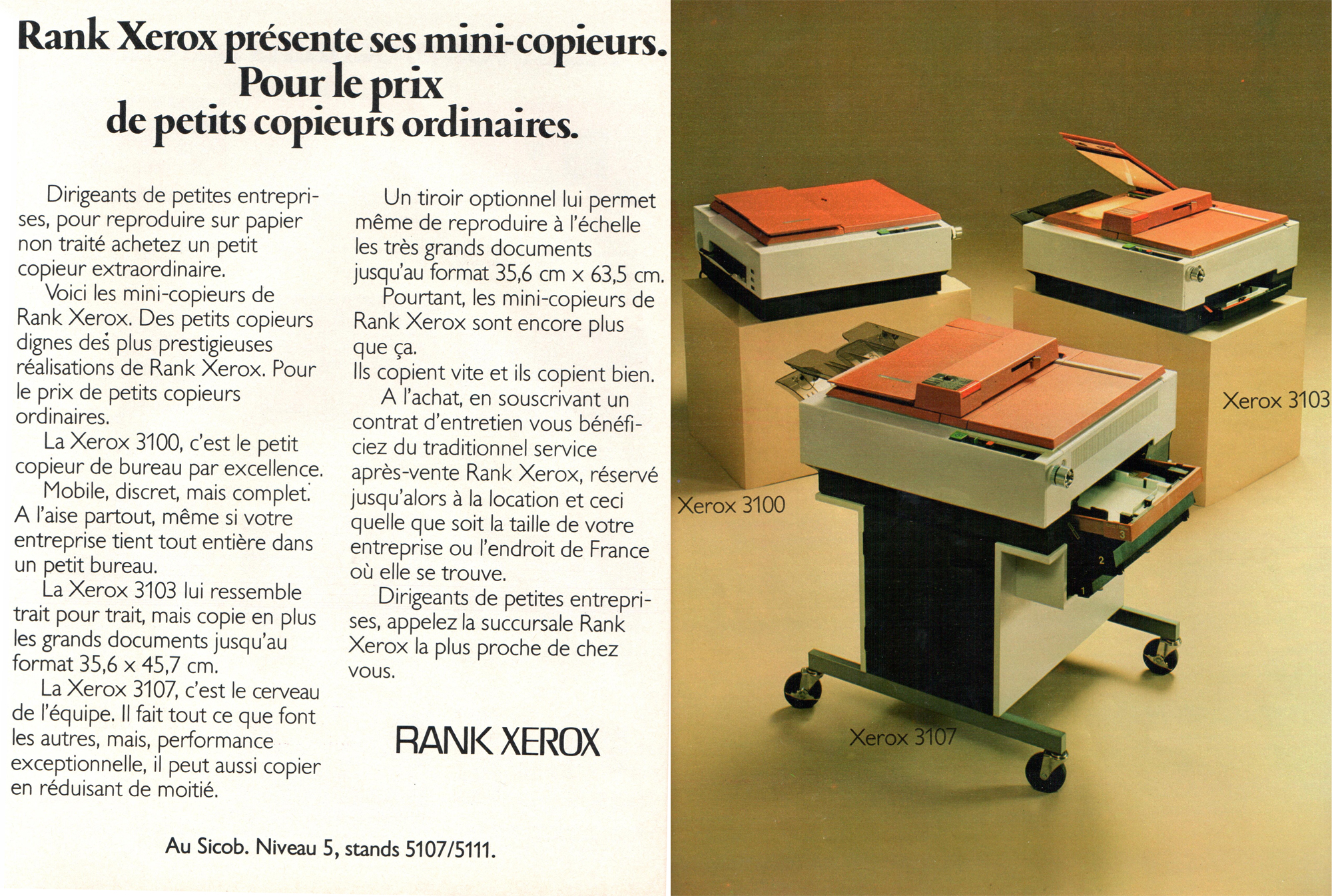
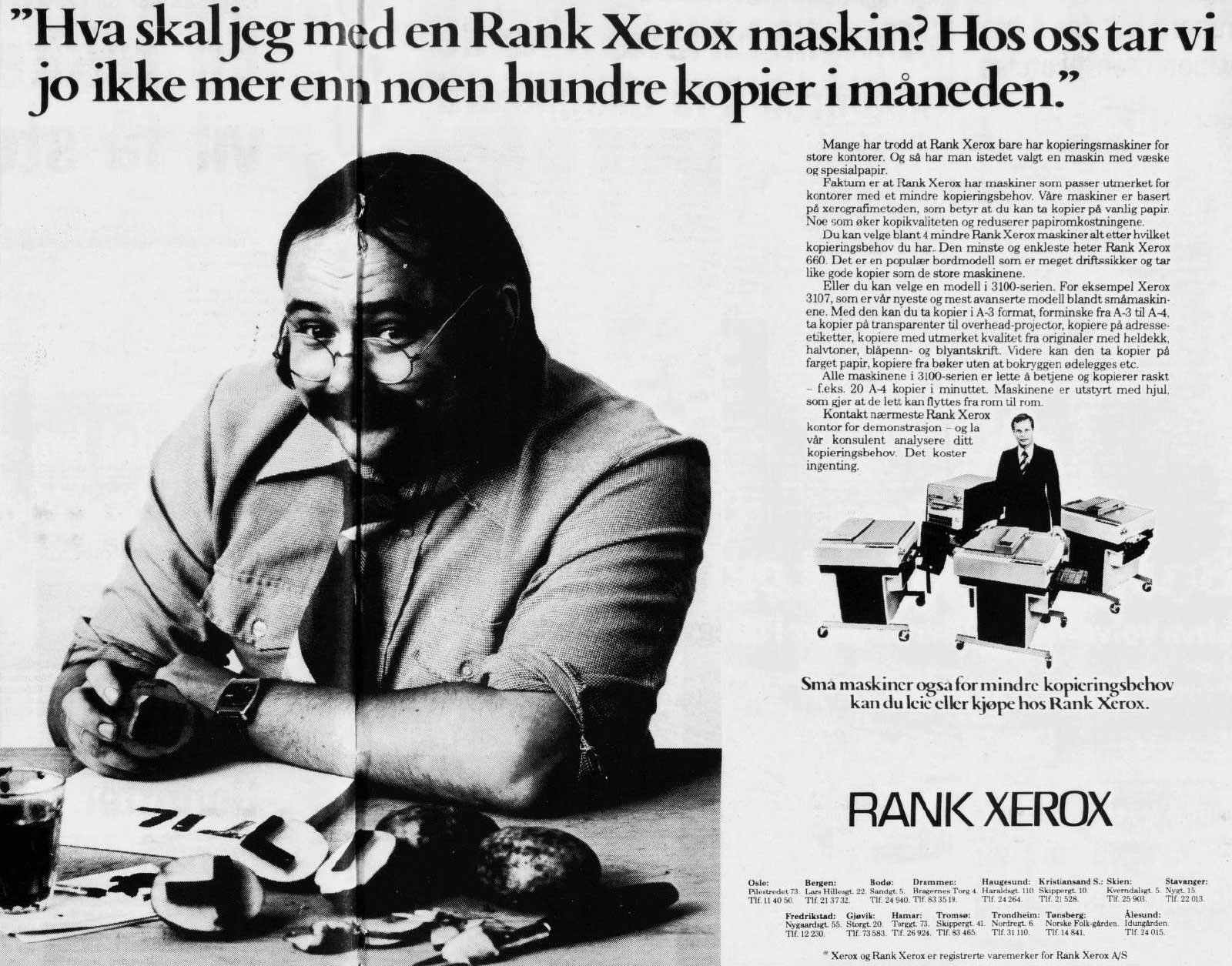
The Xerox 3100 LDC and 3103 were one and the same machine, in different markets. Marketed by Rank Xerox as the 3103, it was a re-engineered 3100, with a flip-up platen cover and a document feeder that moves the document over on to the glass, when you pull the lever forward. This was the analogue precurser of all todays digital, slit-glass scanners.
It also had adjustable developer bias, to give additional 'Light Original' and 'Coloured Background' settings. These levels could be adjusted, by an engineer, to the customer's requirements. In practice, this feature was rarely used. It was intended to reduce copy quality complaints but, sadly, did not.
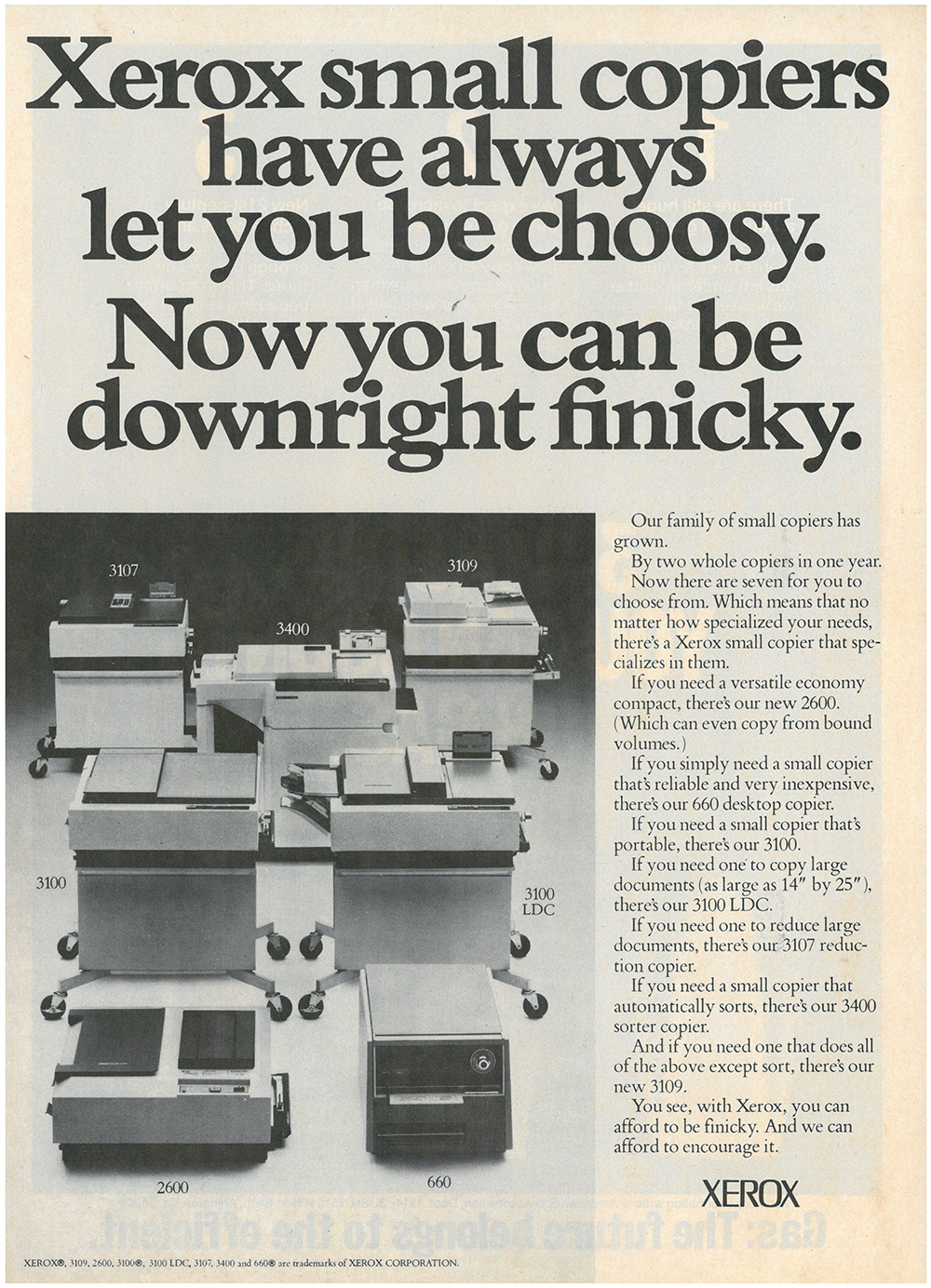
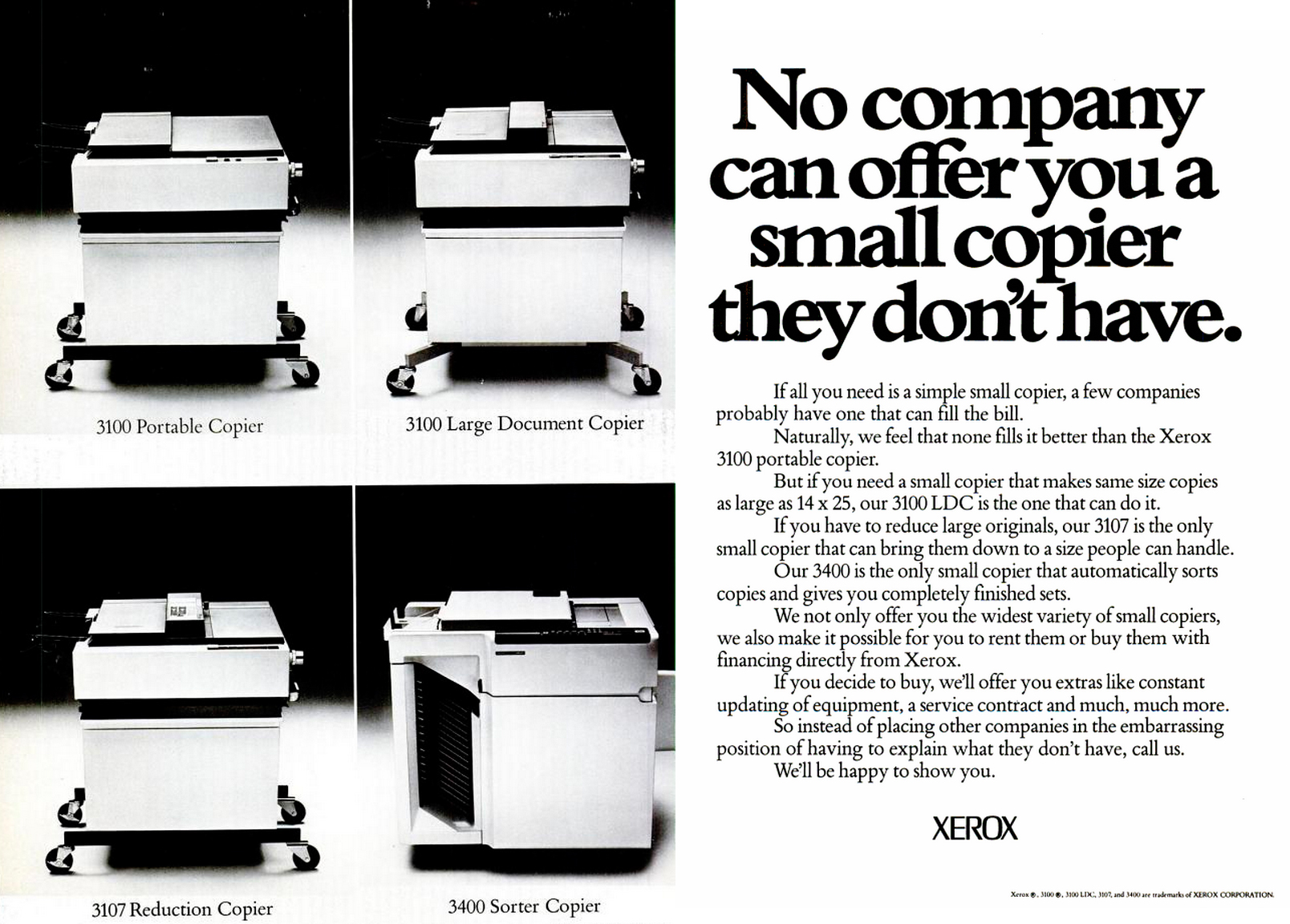
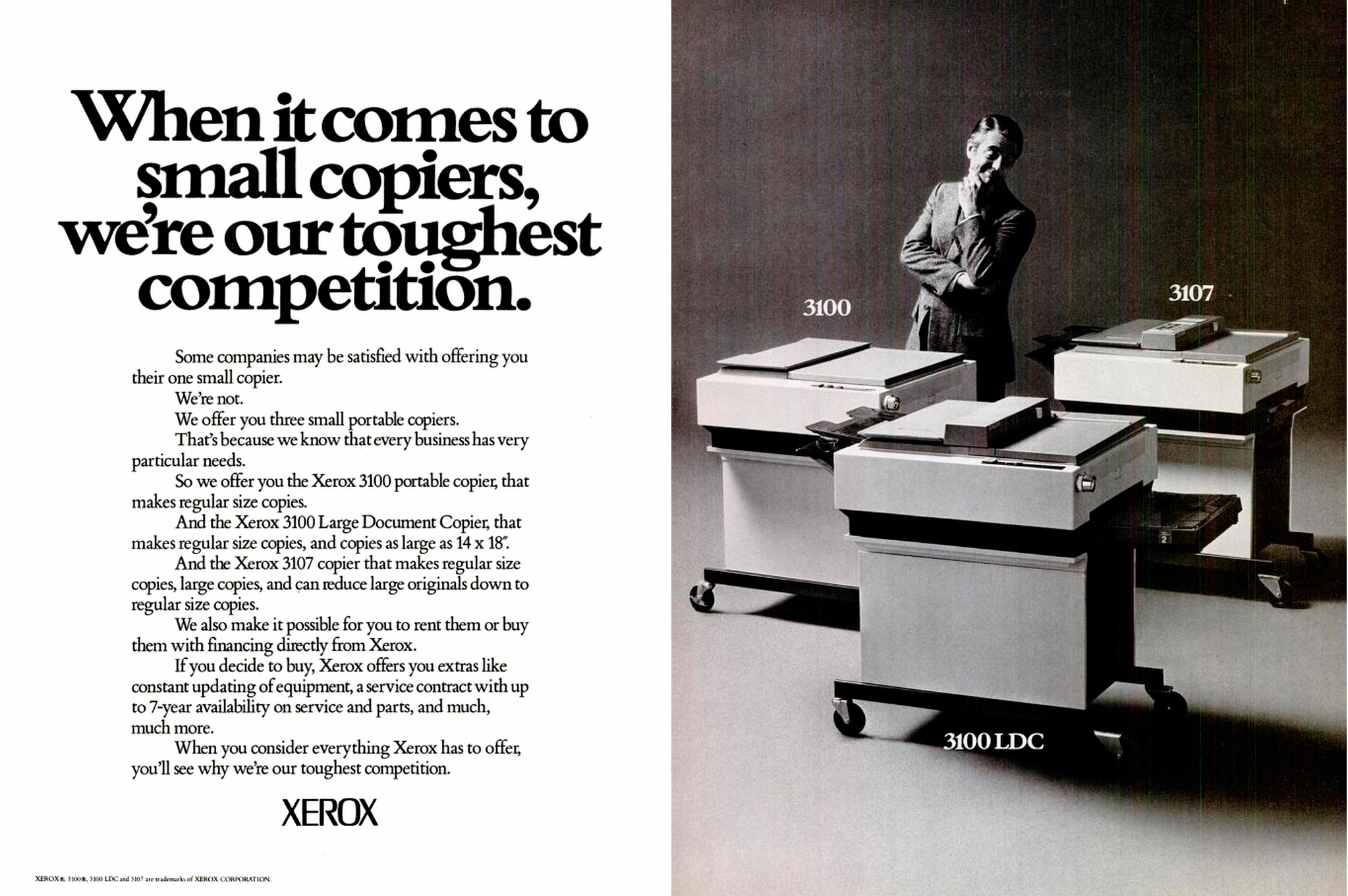
The Xerox 3100 LDC, or Large Document Copier, was introduced in 1974 as a compact copier designed to handle unusually large documents in office environments. It could be moved easily into different workplaces and was capable of copying a wide range of originals, including documents up to 14 inches wide and 25 inches long. This made it useful for business and professional documents that were too large for ordinary office copiers
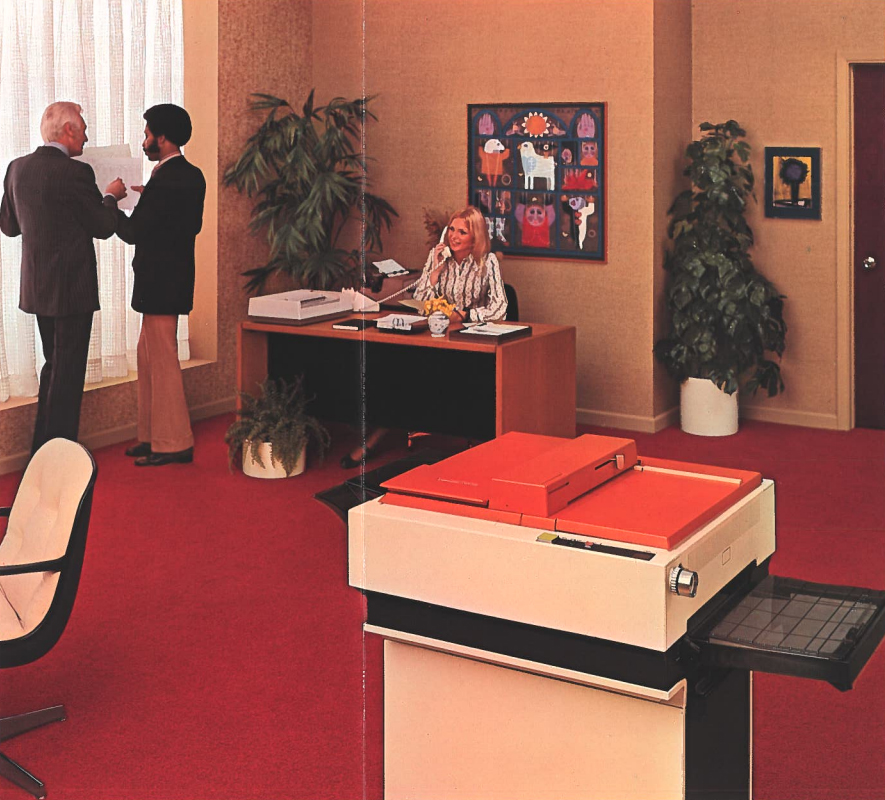
The Xerox 3100 LDC used large paper cassettes to support bigger copying jobs. It had a standard 14 x 18 inch cassette and an optional 14 x 25 inch cassette. These cassettes could handle different paper sizes and materials, including letterhead, legal-size paper, preprinted forms, colored paper, self-adhesive labels, and overhead transparencies.
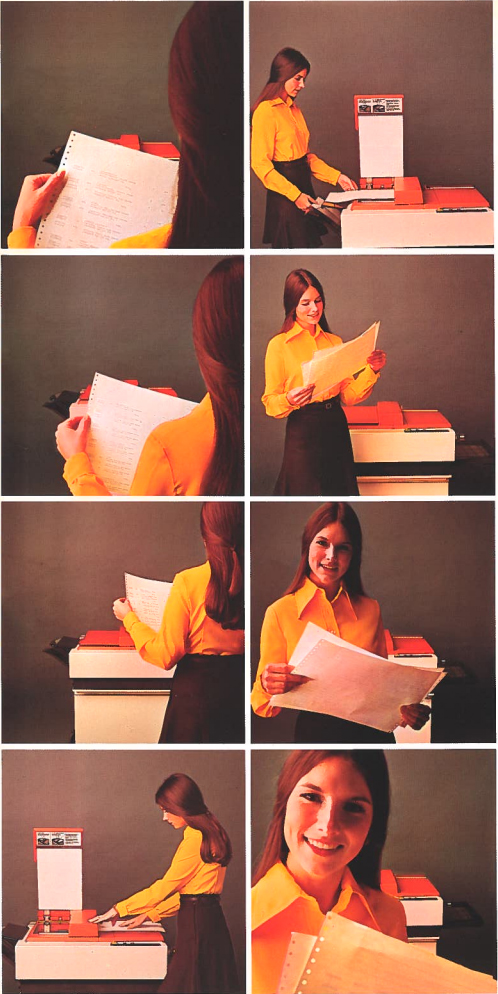 The machine was fast for its time, producing up to 20 copies per minute, with the first copy ready in about eight seconds. It produced clear black-on-white copies, and a Copy Lighter/Darker control helped improve copies made from low-contrast originals. Its large edge-mounted platen made it possible to copy flat documents, artwork, computer printouts, three-dimensional objects, and bound volumes.
An automated Large Document Handler could feed oversized sheet originals into the copier. When used with the standard-size paper cassette, it allowed single originals to be stream-fed and copied at speeds of up to 17 copies per minute. Reverse feeding of multi-page originals also made it possible to produce fully collated copies.
The Xerox 3100 LDC was useful across several industries. In manufacturing and distribution, it could be used for production schedules, inventory reports, engineering drawings, specification sheets, sales forecasts, program charts, shipping manifests, and bills of materials. In architecture, construction, and engineering, it was suited for specifications, project schedules, plans, drawings, bidding and contract forms, payroll records, computer printouts, and progress reports.
For business and professional services, it could be used for ledger sheets, legal documents, shipping records, computer printouts, charts, graphs, inventory records, invoicing records, advertising layouts, and even two full pages from a tabloid newspaper. In transportation, it was promoted for dispatching charts, damage claim records, bills of lading, account records, rating information, payroll records, and freight bills. Overall, the Xerox 3100 LDC was positioned as a small copier with unusually broad document-handling capabilities for its time.
| IMAGES |
| SPECIFICATIONS | |
|---|---|
| Copy speed (per minute) | 20. First copy after 8 second. |
| Paper tray | 250 sheets |
| Output tray capacity | n/a |
| Finisher/sorter |  |
| Staple function | |
| Reduction/zoom | |
| Document handler | |
| Dimension and weight | |
| Depth | 72 (cm) / 28 (inches) |
| Width | 125 (cm) / 48 (inches) |
| Height | 99 (cm) / 39 (inches) |
| Weight | 143 (K grams) / 316 (Lbs) |
| Floor space requirements | Stationary: 1.4 x 1.7 (meters) / 4.6 x 5.6 (feet) |